You have my democracy sword
Media Media
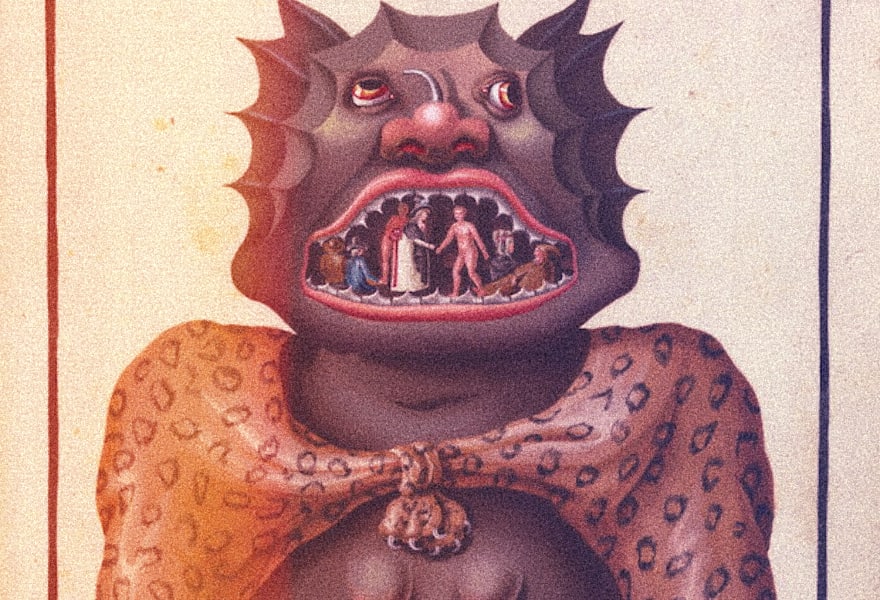
"Strategy is the art of creating power."1 A corollary of this definition is that you can evaluate a chosen strategy based on whether one's power has increased or decreased after execution.
With this in mind, let us turn to Saxony-Anhalt where the authoritarian AfD, in the elections that were held this last weekend, just came in first with 2.4x the votes of the second (CDU), which has been flirting actively with far-right ideas for months. Noting the decisive victory, Elon Musk posted an enthusiastic "gut gemacht!" Meanwhile, Facebook had been pushing AfD propaganda with gusto. As everyone and their dog is writing today, for all that Saxony-Anhalt is small this doesn't bode well for other coming elections in Europe in 2027.
The problem I want to raise here isn't that a tech CEO is a fascist — that's a common occurrence these days, read The Nerd Reich if you haven't already — but rather that we have the pro-democracy and authoritarian groups applying different strategies but only one side is creating power. And in case you didn't know, it's not the democracy people.
How do the strategies compare? A good representative view of the pro-democracy side is the set of "action points" (sic) in the European Commission's Democracy Shield. The Democracy Shield was created in response to the fact that, as Ursula von der Leyen herself put it, “the core tenets of our democracy are under attack.” On this she is not wrong.
I won't claim to be an expert on documents written in response to the core tenets of something important that I care about being threatened. I've read those, of course, we're in a polycrisis after all, but not to the point that I feel qualified in making generalisations. Having said that, the Democracy Shield is certainly different from what I'd have expected in terms of reacting to attacks on core tenets. It reads like the Shield is responding to a junior regional league field hockey team underperforming somewhat. If the floral arrangement of milquetoast nothingburgers were an art form, they'd be keeping it with the Mona Lisa. It conveys a sense of urgency with about the same level of conviction that airport security conveys a sense of steamy, tempestuous romance.
To summarise, the proposals are essentially:
- Improved voluntary cooperation on information integrity, with perhaps some coordinated fact checking.
- Strengthening cooperation on election integrity, along with best practices on online safety and the usage of AI.
- Non-binding recommendations on journalist safety and support for the media.
- Information literacy and programmes to support shared values, along with engagement with civil society organisations.
Now, let's look at what the authoritarians are doing. Here are the average monthly active recipients (AMAR) for social media platforms, as they reported it themselves to regulators for H1 2026, along with the percentage of the EU population this represents and their political alignment2:
- YouTube, 462m (102% — there are only 452m people in the EU, I believe that Google is reporting accounts rather than individuals here.)
- Instagram, 296m (65%)
- Facebook, 263m (58%)
- TikTok, 189m (41%)
- X, 64m (14%)
All of those have pro-authoritarian leadership, and the only one that isn't MAGA-aligned (outside of the US) is TikTok. Those numbers are for reach, but they correspond to reported numbers on news referrals as well as with socio-cultural influence. A few other sources make a decent showing in the list (SnapChat, LinkedIn) but they remain small. No European app makes the list.
This is well-known, but it's not the whole story. Two other factors must be taken into account. First, social media isn't just another media — it's the leading distribution channel for other media too. In a sense, what we're dealing with is media media. Globally, social media is the number one source of news and social media native forms of news are rising sharply3. Second, social media is editorial media and is only marginally influenced by social aspects. According to Meta's own disclosure, only 7% of time spent on Instagram (and 17% on Facebook) involves content from people you follow. You read that right: 93% of time spent on Instagram is on content chosen editorially by Meta. We don't have numbers for other platforms, but the existing evidence points in the same direction (e.g. both YouTube and TikTok actively push boys towards toxic masculinist content).
To summarise:
- Social media is both the leading source of news and leading distribution channel for other media — it's media media.
- Social media, as practiced by the leading sources, is almost entirely editorial.
- Leading social media sources are overwhelmingly owned and operated by authoritarians, mostly MAGA-aligned companies.
If you'd just awoken from a long coma and I gave you nothing but these facts, who would you guess is winning, the fascists who own the actual physics of online information or the Kurt Schuschnigg wannabes who are trying to counter propaganda according to the rules laid out by the former group?
It's not much of a contest.
And it's not as if we didn't know. The political effect of X is to make people durably more conservative. Most of polarisation can be explained not by "both sides" each drifting apart in equal but through the radicalisation of conservatives towards antidemocratic, illiberal positions and greater openness to political violence. We need to put an end to this radicalisation machine.
We don't need a democracy shield — we need a democracy sword. The time for non-binding resolutions on the urgency of protecting democracy is long over, we need to work to further democracy. The only way there is control over the rules of online information by democratic forces, according to democratic principles (notably pluralism). This means owning and operating our own social media infrastructure, as we are doing with Eurosky, in order to deploy a European model of tech in which shared infrastructure supports a whole ecosystem of smaller, nimbler, competing actors (as we do with in other sectors). It means using cool new social media apps designed from the ground up to operate commercially in multiple markets amid many compatible competitors with different preferences, as Mu is doing (with alternatives powered by the same content soon launching in various countries). On the policy side, it means imposing ambitious interoperability mandates so that the many people who are unhappy with their current social media but are stuck there due to network effects can move to better alternatives without losing their content, their identity, or their network — we know how to do this, along with our friends from OpenPortability. From leaders and policymakers, it means starting to plan your exit from current social media by building up a following elsewhere. (Any competent social media person can do this: I moved to Eurosky & Mu and have 50% more followers now than I did on X.)
Democracy involves the dispersal of power, but dispersing the power of oligarchs, not towards them. For that to happen, we need to build for it.